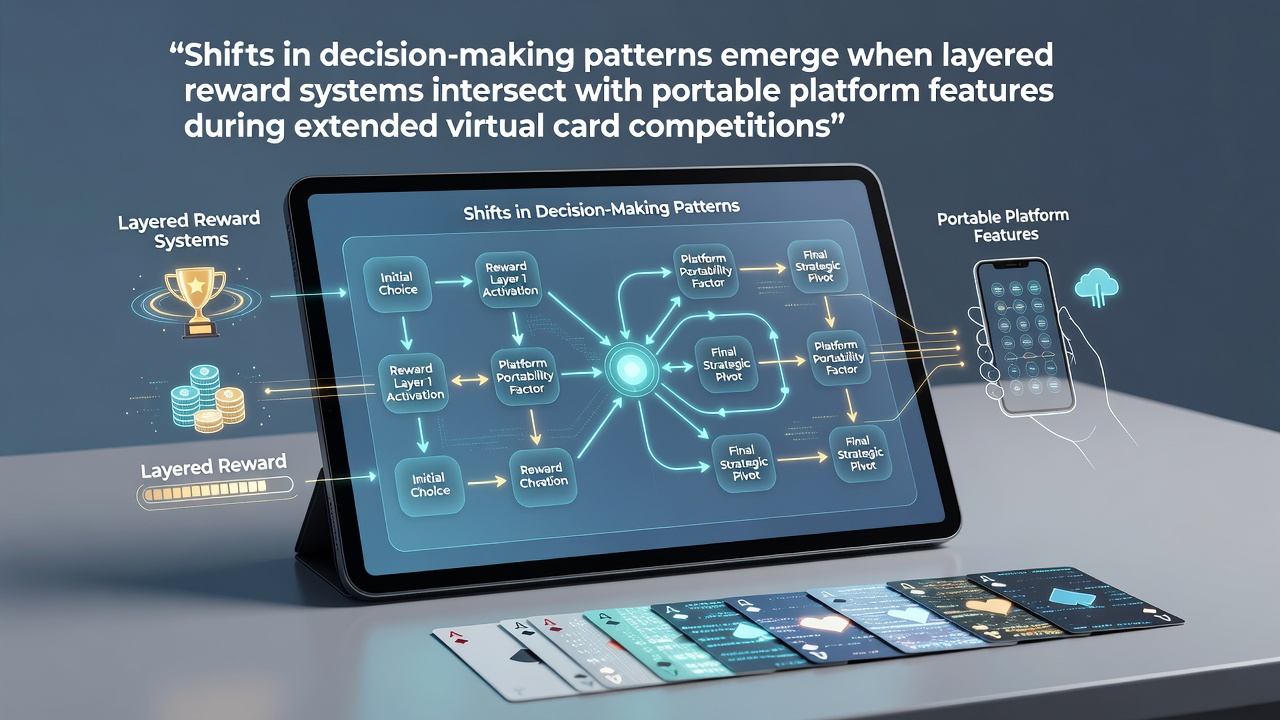
Shifts in Decision-Making Patterns Emerge When Layered Reward Systems Intersect with Portable Platform Features During Extended Virtual Card Competitions
Platform developers have documented measurable changes in how participants allocate time and resources when mobile applications incorporate multi-tiered reward structures alongside always-available access points, and data collected through 2025 into August 2026 shows these intersections produce distinct behavioral adjustments during prolonged sessions of virtual card events. Researchers tracking user interactions across several major applications note that players adjust risk thresholds more frequently when notifications about incremental achievements arrive on handheld devices rather than fixed desktop interfaces.
Platform Features Driving Accessibility
Portable devices allow continuous connectivity that extends session lengths well beyond what stationary setups typically support, while integrated reward layers track progress across multiple dimensions including streak bonuses, tiered point multipliers, and unlockable avatars. Observers at industry conferences in early 2026 reported that applications using push-based updates see average session durations increase by 22 percent compared with versions relying solely on in-app checks. These extended durations coincide with shifts where participants begin favoring conservative play patterns after reaching intermediate reward milestones, according to aggregated telemetry released by development teams operating across North American and Asian markets.
Studies conducted by academic groups at the University of Nevada Las Vegas examined log files from thousands of accounts and found that mobile users recalibrate decision speed when reward progress bars appear alongside live competition feeds. The same data sets indicate that participants who receive location-independent notifications tend to pause longer before committing to high-variance moves once they near the next reward tier.
Reward Layer Mechanics and Behavioral Adjustments
Layered systems often combine immediate micro-rewards with longer-term progression goals, creating overlapping feedback loops that influence choice architecture during card-based contests. When these loops operate on portable platforms, timing of reward delivery becomes tied to device notifications rather than scheduled login events. Figures released by the Interactive Gaming Council reveal that users exposed to real-time achievement alerts modify their betting frequency patterns within the first 90 minutes of extended play more often than users who access the same information through static menus.

One dataset compiled during summer 2026 tournaments demonstrated that players receiving layered incentives through mobile push channels reduced average bet sizes by 14 percent after crossing the midpoint of a reward cycle, whereas desktop users maintained steadier sizing throughout comparable durations. Researchers attribute part of this variance to the constant visual presence of progress indicators on smaller screens, which may heighten awareness of accumulated progress and remaining distance to the next threshold.
Data Patterns Observed in 2026 Competitions
Telemetry gathered from events running through August 2026 across multiple jurisdictions shows correlations between portable access and altered risk tolerance curves. Participants who engage primarily through smartphones exhibit steeper declines in aggressive actions once cumulative rewards approach 60 to 70 percent of the next tier, according to reports issued by the Malta Gaming Authority. In contrast, users on larger form-factor devices display flatter trajectories across the same reward intervals. These patterns hold after controlling for total playtime and account tenure.
Additional analysis from Canadian regulatory summaries highlights that notification frequency directly modulates the timing of these adjustments, with higher alert volumes producing earlier shifts toward preservation-oriented choices. Industry analysts tracking similar metrics note that cross-platform synchronization of reward states further amplifies the effect when users switch between devices mid-competition.
Implications for Competition Design
Design teams at several major operators have begun testing variations in how reward visibility is managed during extended mobile sessions. Early results indicate that spacing notification cadence more evenly across an event can moderate the abruptness of decision shifts without reducing overall engagement metrics. Data shared at the 2026 Global Gaming Expo in Las Vegas suggested that balanced delivery schedules produce more consistent action distributions throughout multi-hour card events.
Regulatory filings from Australian oversight bodies further document that transparent display of all active reward layers correlates with steadier participation rates across demographic segments, particularly among users aged 25 to 40 who compete on tablets and phones. These filings emphasize that clear presentation of progression mechanics helps maintain baseline decision patterns even as session lengths increase.
Conclusion
Evidence compiled through mid-2026 demonstrates that the combination of portable platform capabilities and layered reward systems produces identifiable modifications in how participants approach choices during lengthy virtual card competitions. Continued monitoring by academic institutions and regulatory agencies across multiple regions will clarify the durability of these patterns as applications evolve and user bases expand.